
What's happening inside the fabric?
Clothes made from natural materials like cotton, linen, and hemp are full of cellulose – long chains of glucose molecules that plants use to build their cell walls. These chains are held together by hydrogen bonds, giving the fabric its structure and stiffness.
When you toss those clothes into the washing machine, water breaks those hydrogen bonds, and the chains start to shift around. As the clothes dry, new bonds form randomly – and now your worst fabric enemy appears: wrinkles.
How the iron smooths it all out
- Steam: breaks up the hydrogen bonds again.
- Pressure: straightens the cellulose chains.
- Heat: dries the moisture and locks the fabric into its new, smooth form.
Cotton needs a high temperature (around 200 °C), while synthetic fabrics like polyester prefer lower heat.
What about synthetic clothes?
Synthetic materials like polyester and nylon are made from plastic fibers. They don't wrinkle from water, but from heat. When heated, they reach a "glass transition" phase where they become soft and flexible – if they cool down in a wrinkled position, that's where the wrinkles stay. But if you wash them on a gentle cycle and dry them carefully, you can often skip ironing altogether.
And what are "non-iron" clothes?
"Non-iron" garments aren't magic – they're chemistry. The fabric (usually cotton) is treated with chemicals like formaldehyde and "baked" so that hydrogen bonds don't break during washing. The result: less ironing needed.
Why professional irons beat home irons
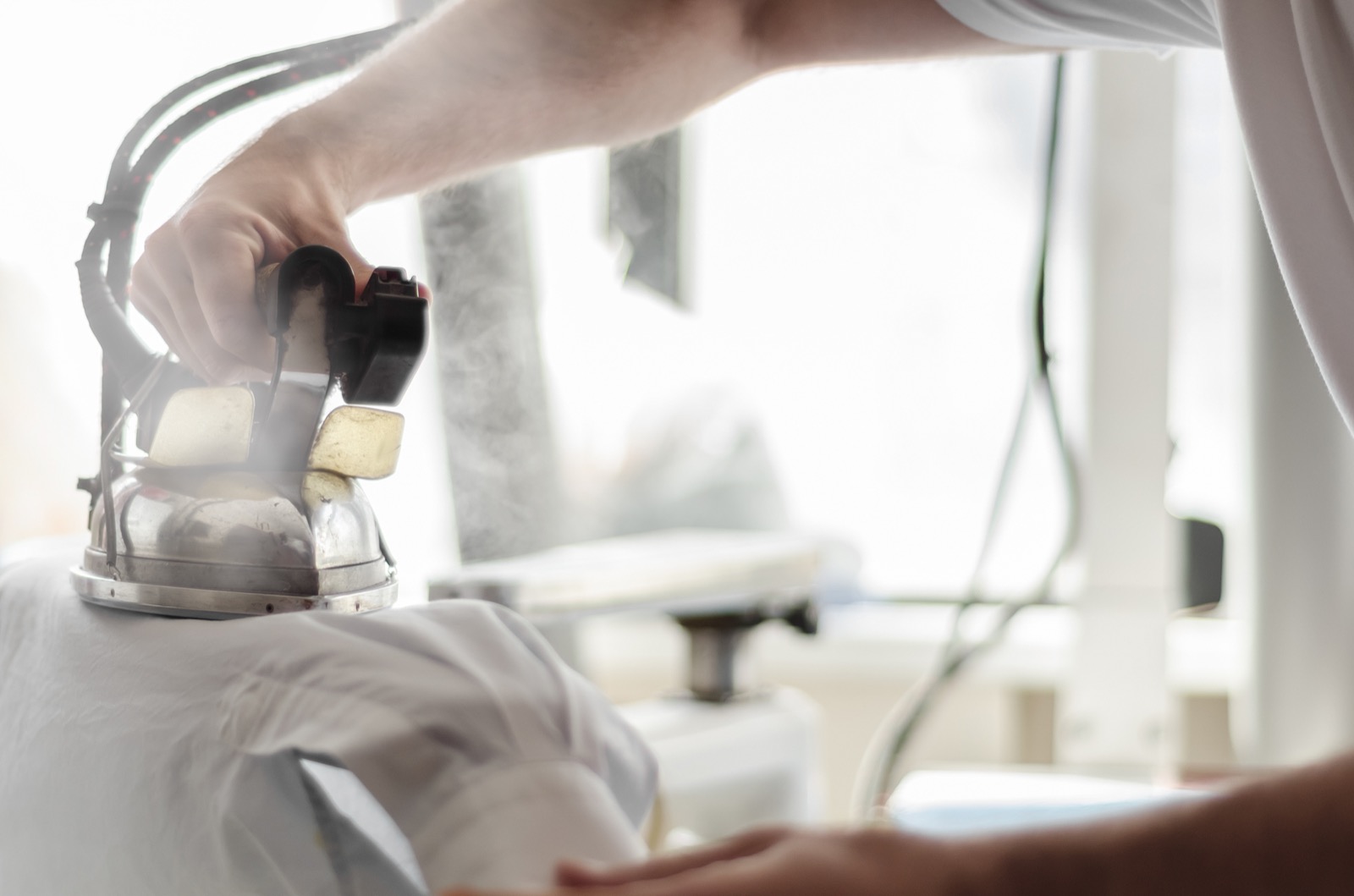
Both home and professional irons reach about the same temperatures, so it's not really about heat. The real difference is steam: home irons have a small built-in water tank that produces weak, inconsistent steam, while professional irons have external tanks that deliver powerful, steady steam throughout the session. Professional irons are also heavier, adding pressure without requiring you to push hard.
Golden rules for better ironing
- Use slow, sweeping motions
- Keep the iron moving – never leave it in one place too long
- Steam is your best friend – use it often
- A bigger board gives you more freedom of movement
Common mistakes to avoid
- Not using steam at all
- Relying on the spray function (it often causes stains)
- Obsessing over the temperature setting